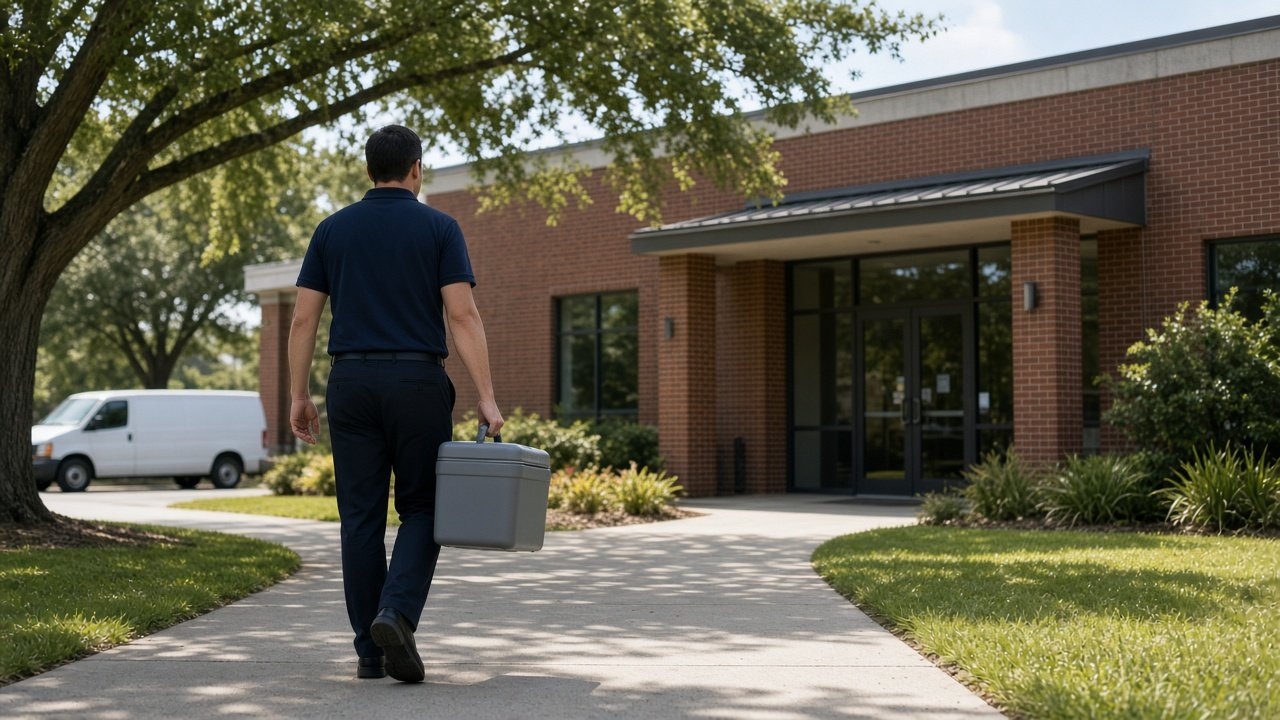

How to Choose a Medical Courier in Columbus, Georgia
If you run a clinic, laboratory, or pharmacy in Columbus, Georgia, the courier you choose is part of your care process. Specimens have to stay intact, prescriptions and supplies have to reach the right counter, and records have to be handled discreetly.
KB Medical Courier Service LLC is a Columbus-based medical courier that works as a private subcontractor for laboratories, clinics, pharmacies, hospitals, and medical offices. This guide covers specimen handling, chain of custody, temperature control, HIPAA-minded handling, and on-time delivery. It does not invent credentials or performance statistics.
Start with the work you actually need to move
Before you compare companies, list the cargo, the locations, and the timing you need:
- Laboratory specimens and samples prepared by your staff
- Pharmacy items moving between authorized medical locations
- Medical supplies and equipment
- Records and documents
- Same-day or STAT runs, regular scheduled routes, or both
A courier that fits a daily lab route may not be the right fit for an unscheduled STAT pickup. Ask whether the company can support the mix you actually have. You can review KB Medical’s service types on our Services page. We are based at 6000 River Rd, Columbus, GA 31904, and arrange ground medical courier work from that Columbus location.
Specimen handling and who packs the shipment
The shipper is responsible for packing and classifying the specimen before it is offered for transport. A courier should move what you have prepared, following your instructions, not improvise packaging on the curb.
U.S. Department of Transportation hazardous materials rules apply when infectious substances are offered for transportation. The U.S. DOT PHMSA infectious substances overview explains Category A and Category B classifications. For many routine diagnostic specimens that meet the Category B definition, 49 CFR 173.199 requires triple packaging: a primary receptacle, a secondary packaging, and a rigid outer packaging, plus marking and documentation.
The CDC packing and shipping training is a useful official resource for laboratory staff. It draws on Department of Transportation and International Air Transport Association (IATA) requirements, and it is not a courier certification.
Ask whether the shipper packs specimens before pickup, whether a driver will refuse a leaking or unready package, and how coolers are handled. People who may be exposed to blood or other potentially infectious materials should also review the OSHA Bloodborne Pathogens overview. A serious medical courier will treat sealed packages with care and will not open specimen containers.
Chain of custody from pickup to drop-off
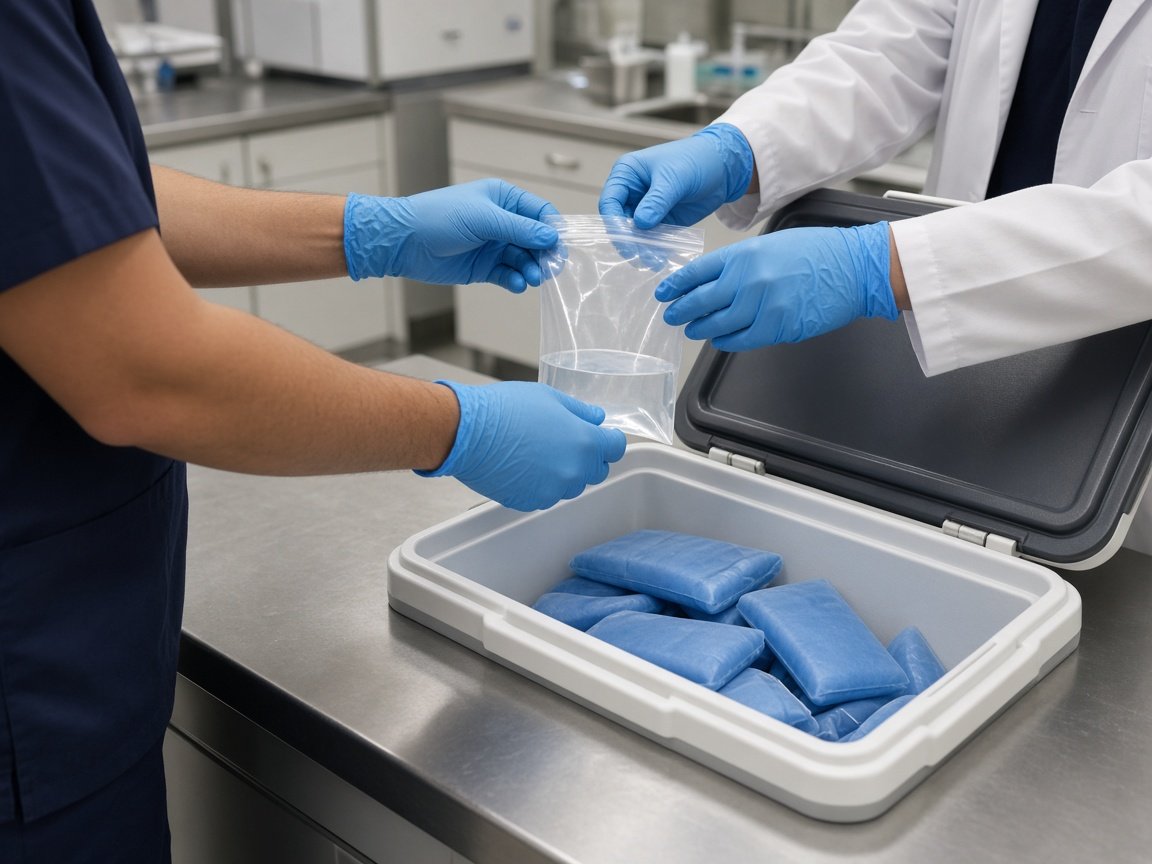
Chain of custody is the record of who had the package, when, and where it went. A broken chain can call a lab result into question or leave a pharmacy tote unaccounted for. Ask a prospective courier to walk you through a pickup and a delivery:
- How is the pickup scheduled, and who confirms the window?
- What does the driver check before accepting the package?
- How is the handoff documented at origin and at destination?
- What happens if the receiving desk is closed or the named contact is unavailable?
- How will you tell the sender if something is delayed?
KB Medical transports what you have prepared, following your chain-of-custody and timing instructions. We do not invent a custody form or replace your laboratory’s accessioning process. We do expect clear pickup and drop-off points, a named contact when you have one, and packaging that is closed and ready to travel.
Temperature control on the road
Many specimens and some pharmacy items are useless if they warm up or freeze in transit. The shipper usually supplies or specifies the insulated container and packs the item for the expected travel time. The courier’s job is to keep that packaging closed, out of direct heat, and on the agreed schedule. Ask whether the driver will transport the cooler as packed, how it is secured in the vehicle, and what happens if a route runs long.
Federal packaging rules also address refrigerants. For Category B substances, 49 CFR 173.199 explains that ice or dry ice must be placed outside the secondary packaging or in an overpack, and that dry ice packaging must allow carbon dioxide gas to vent. Do not ask a courier to add ice unless that has been arranged in advance. In Georgia heat, build the travel time and any wait into the pickup plan, and say so when you request a pickup.
HIPAA-minded handling of information and packages
Medical deliveries sometimes travel with names, accession numbers, prescription details, or other information that can identify a patient. The HIPAA Privacy and Security Rules apply to covered entities and, in many arrangements, to their business associates. The HHS covered entities and business associates page is the official starting point for that framework.
A covered entity should decide, with its own counsel or privacy officer, whether a particular courier arrangement involves protected health information and whether a business associate agreement is required. This post does not make that legal determination, and KB Medical does not claim a special HIPAA certification. What you should expect is HIPAA-minded handling: packages and paperwork kept out of public view, drivers who do not read records beyond what the delivery requires, and prompt notice if a package is delayed or misdirected.
On-time delivery, STAT runs, and scheduled routes
“On time” should be defined in advance: a specific window, a same-day STAT pickup, or a standing route with set stops. Ask whether the company can support both STAT runs and scheduled routes, how you place a request, what the driver needs so they are not waiting at a locked door, and how delays are communicated.
KB Medical handles same-day STAT runs and scheduled routes for medical cargo, along with the specimen, pharmacy, supply, and records work described on our Services page. We do not publish guaranteed arrival times or on-time percentages, because those figures depend on the assignment, traffic, and whether the package is ready at pickup. We can agree on a window, stay in contact, and complete the handoff as instructed.
How to request a pickup in Columbus
KB Medical Courier Service LLC is a private subcontractor. We partner with independent contractor drivers, who are not employees, to complete assignments. That model is described on our About and FAQ pages. It does not change the expectation that packages are handled carefully and on the agreed schedule.
If this is the support your clinic, lab, or pharmacy needs, request a pickup on our Contact page, call (240) 945-8697, or email kbmedicalcourier190@gmail.com. Please include the pickup and drop-off addresses, the type of item, handling notes, and whether the run is STAT or scheduled.
KB Medical Courier Service LLC is based at 6000 River Rd, Columbus, GA 31904. The company was founded by Alexander Tanyi Betchem, who also leads MastermindGOC, a business services firm.